Some background before we get started
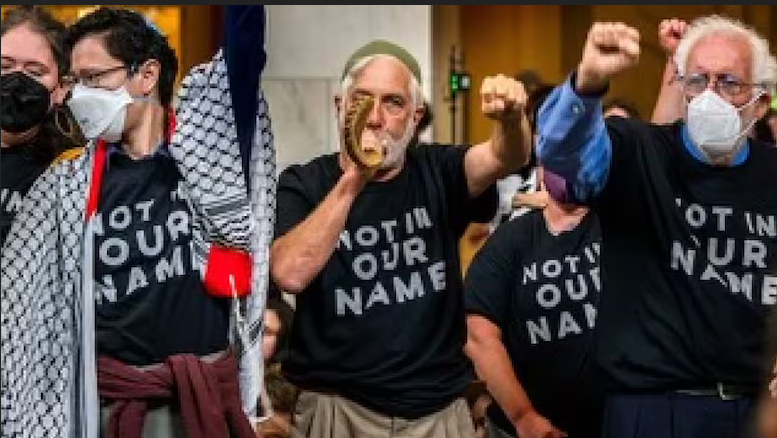
Bubble zones are very much in the news these days. They are spaces near buildings that belong to vulnerable groups such as places of worship, schools, and day care centres. They may be so designated after an application to a council by members of the vulnerable group. Within such a space (e.g. 20, 50 or 100 metres from the building in question) demonstrators must refrain from actions that discourage, block, or violently impede access to the facility. They must also refrain from hateful behavior directed against the group’s religion, ethnicity or identity. The penalty for so doing may be a fine. In theory, bubble zones don’t prevent peaceful, legal demonstrations. In practice, the police may determine what is, and is not, peaceful and legal.
Activists are making the rounds during the hot and sweaty summer months at Hamilton City Hall, knocking on the office doors of local elected politicians and assistants. They are raising concerns about a proposed, city-wide “bubble zone” bylaw coming down the pipe at city council which “prohibits protests at places of worship and their facilities.”
The bylaw appears to solely target pro-Palestinian activists as part of a national and international trend of repression by western governments and police. At the same time, the law also carries broader implications for all nonviolent public rallies and marches on a range of political issues in Hamilton, a fact noted by Alex Ballagh, co-chair of the downtown Hamilton chapter of Acorn, the major tenants’ rights organization in this city:
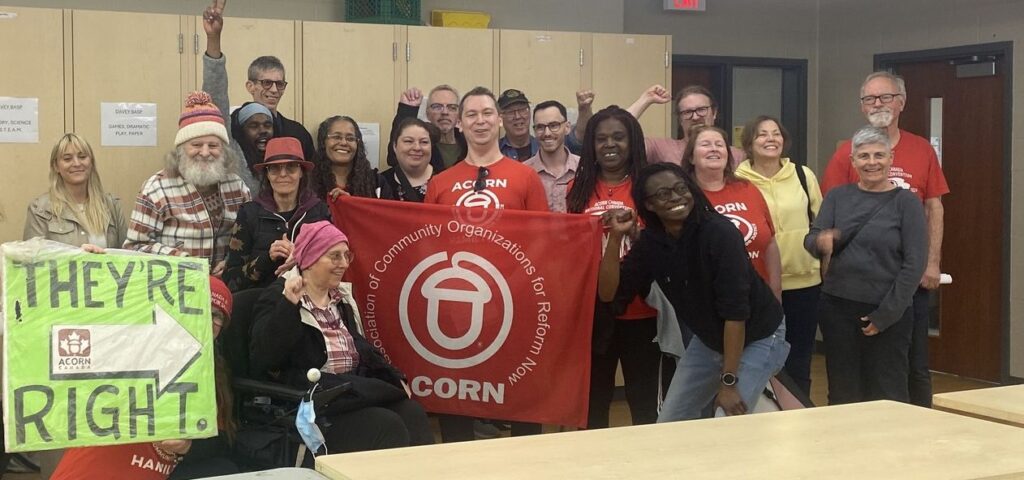
“Bubble zone bylaws essentially only exist to silence free speech, prevent freedom of assembly, and give the government a tool to essentially suppress protests.”
Balagh’s organization is participating in the lobbying against the bylaw, details of which are not yet available.
A central figure in the local opposition to a protest ban is David Mivasair, a retired and politically engaged rabbi living in Hamilton. He is a high-profile member of Independent Jewish Voices, a Canada wide anti-Zionist organization and spends much time raising funds and other forms of support for besieged people in Gaza. The rabbi is asking everybody involved in the issue to stop using the term “bubble zone,” since the “cuteness” of the term minimizes the seriousness of what it entails.
As a veteran activist, he goes by the philosophy that it is the politically marginalized who are forced by necessity to protest against what has gone wrong in society at home or abroad. “People protest when they do not have other means; people who have inside influence do not go to the street,” stated Mivasair.
On the Palestine issue, he cites the example of pro-Israel organizations such as the Centre for Israel and Jewish Affairs, which has the ear of those in power and does not need to stage rallies with placards on a continuous basis to get its point across to the public.
Mivasair says there is a real possibility that a majority of Hamilton city councillors will support the proposed measure which explains the sense of urgency among the opponents.
On March 26 this year, the majority on Hamilton city council decided by a vote of 14-2 to support a planning committee motion to have city hall lawyers write a draft of a protest ban. The two dissenters are ward 2 and 13 councillors Cameron Kroetsch and Alex Wilson, respectively — both members of what purportedly constitutes a large, progressive, left bloc on council.
Their political colleague, ward 3 councillor Nrinder Nann, emailed me that she supported the instructions to the city lawyers to write a bylaw, but maintains she will vote against legislation that violates the Canadian Charter of Rights and Freedoms. Her primary concern is the protection of places of worship for vulnerable religious minorities such as Hindus, Sikhs and Muslims living in Hamilton:
“This draft bylaw will need to have a legal vetting and considerations of the Charter of Rights. Until I have reviewed the draft by-law, I don’t have much to comment on further.”
Nann added: “Hamilton has a history of needing to address [the] hate based attacks and targeting of mosques, gurdwaras, and temples.”
(I should note that Nrinder Nann is my ward 3 councillor in Hamilton and I have worked on her past election campaigns.)
Councillor Nann is possibly referring to the 2001 attack on a Hindu temple, but there is no comparison between largely peaceful, nonviolent rallies about Palestine and an isolated hateful incident.
By way of contrast David Mivasair argues that the new bylaw is primarily about repressing a Palestinian rights movement during a period of starvation and genocide by Israel in Gaza. “All of this [in Hamilton] is being instigated by Zionist pressure groups. It has nothing to do with people worshipping.”
“The main impetus for [a protest ban] is to suppress honest talk about Israel and Palestine.” added Mivasair.
Nann does have a point about Hamilton’s tarnished history of occasional white nationalist flareups.
In 2019, participants in a local Pride event at Gage Park in southeast Hamilton were attacked by an anti-LGBQT2S mob while the police failed to intervene (remarked a commissioned independent report afterward). This was followed at the local city hall by a series of racist rallies on successive Saturdays led by the so-called “yellow vesters” – who in turn were confronted by a larger contingent of anti-hate counter demonstrators. (That same year Hamilton did not respond to these incidents with any ban on protests.)
Councillor Kroetsch responded in an email, like Nann, that he couldn’t comment further until the bylaw’s wording becomes available.
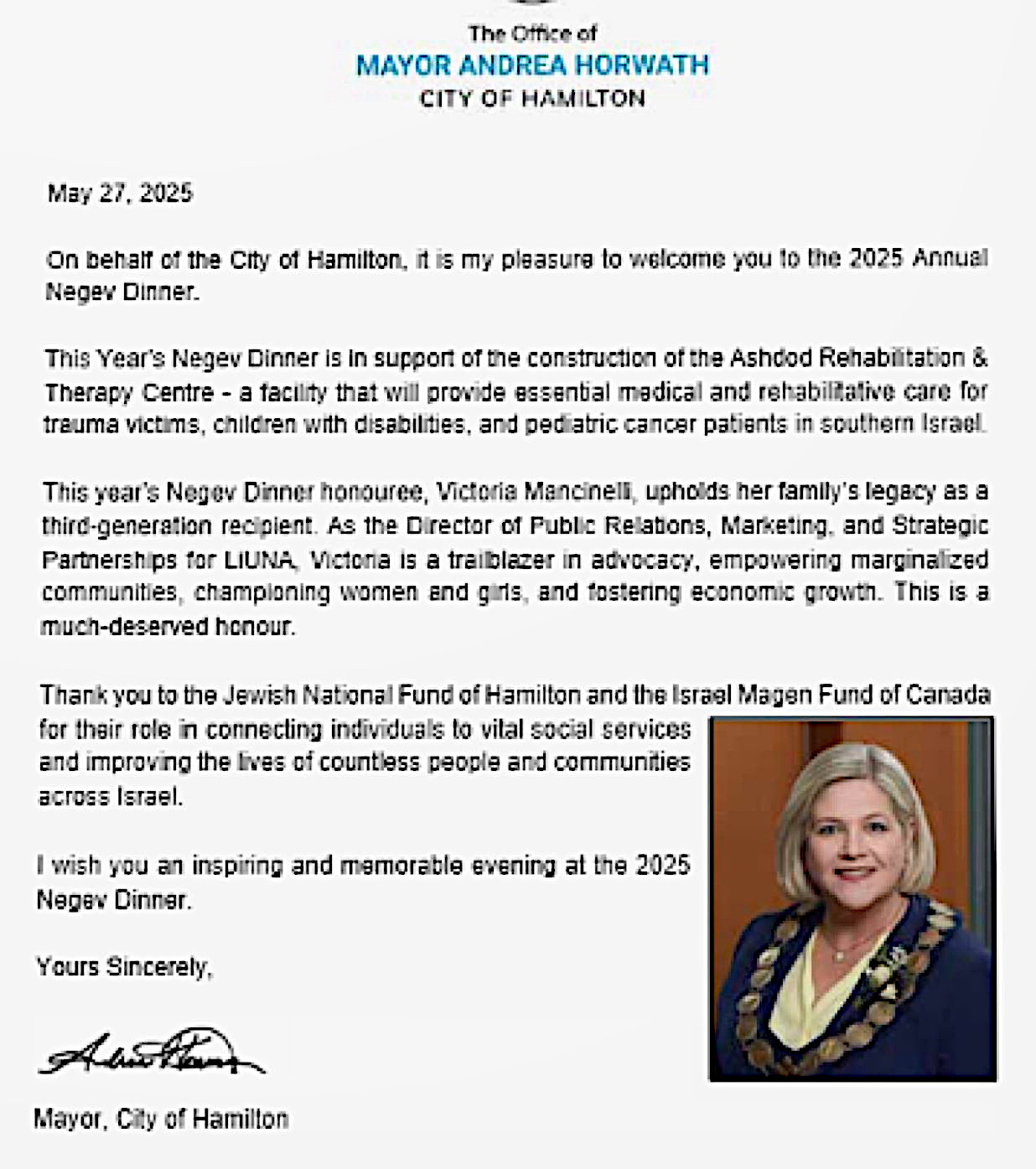
What is readily apparent is that a few of the elected Hamilton politicians with a progressive reputation voted to have city lawyers prepare a protest ban. This included Mayor Andrea Horwath (who in a letter recently welcomed a controversial Jewish National Fund fundraising event in Hamilton). Mayor Horwath’s office did not respond when I requested more information about her stance on the impending new bylaw.
Another progressive, except on the subject of Palestine, is ward one councillor Maureen Wilson (the catalyst for kick-starting the process to have a bylaw drafted). Her office did not respond to my email.
On April 4th, Wilson met for one hour with a number of opponents of the bylaw, including Mivasair, another representative of Acorn Hamilton, retired United Church minister Diane Blanchard, and James Quinn, professor of biology at McMaster University.
Blanchard remarked in our conversation that Wilson failed to explain what motivated her to push for a new legislated protection for places of worship for Hamilton that goes beyond what already exists in law in Canada.
It is possible that Wilson was concerned about picketing in front of a synagogue here in Hamilton. But that has never happened here.
Quinn, a locally prominent environmental activist, has noted that the main impetus for the Hamilton bylaw stems from protests (particularly by Independent Jewish Voices and its allies) on the sidewalk in front of J-Hamilton. This is the new home of the Hamilton Jewish Federation on Main Street West close to McMaster Children’s Hospital and the McMaster University campus.
J-Hamilton is not strictly a place of worship, but an argument could be made that as a community centre it is a related facility. Quinn had participated in a protest outside J-Hamilton, and witnessed the angry insults hurled at the demonstrators by someone who emerged from the building.
Incidentally, I contacted the National Council of Canadian Muslims which has campaigned against Islamophobia in Canada and is urging Canada to take a stronger stance on the matter of Palestinian human rights and humanity in Gaza. A spokesperson for the organization told me that the NCCM will be issuing a public statement on bubble zone protest bans.
At this stage, it would be useful to remind readers of pertinent facts concerning the provincial and national attempt to impose bubble zone legislation and the legal opposition that has been mounted against it.
Specifically, current legal action by the CCLA against the City of Vaughan is the probable reason why Hamilton City Council has set no date for the imposition of its bylaw. If the action succeeds, it will presumably nullify council’s action.
The Current Bubble Ban Controversy in Canada
Cities in Canada such as Vaughan, Calgary and Toronto all have bubble zone bylaws in place.
The city of Vaughan (north of Toronto) was the first to pass such a bylaw in response to a rally on March 7, 2024, by pro-Palestinian rights activists against the marketing of occupied Palestinian real estate, including land on illegal West Bank settlements, at a local synagogue, Beth Avraham Yoseph, in nearby Thornhill.
Lately, the Canadian Civil Liberties Association has announced its own Charter Rights legal challenge of the June 2024 Vaughan bubble zone bylaw.
A separate bubble zone protest ban in Toronto will have some bearing on what happens in Hamilton, says Anthony Marco, president of the Hamilton & District Labour Council who is part of the coalition opposed to a protest ban.
The Toronto Star reported that Toronto city council, with the support of Mayor Olivia Chow, another progressive politician, passed a protest ban despite warnings of its questionable legality by Toronto city legal staff. Newspaper columnist Ed Keenan says the Toronto city councillors are going through a political exercise despite this warning to please a vocal pro-Israel constituency within the city, about one year before the next municipal election.
In fact, as Anthony Marco has noted, the decision by Toronto city council during its deliberations to extend the ban in front of a place of worship and other prohibited spaces, such as schools and day cares, from 25 metres to 50 metres (Chow did not support this) will, in practice, prevent protesters from standing in places where they can effectively and respectfully protest.
In theory, the bylaw permits legal, peaceful demonstrations. In practice, its vague words about actions that may be said to insult members of a vulnerable group may constitute a denial of free speech.
Back in Hamilton
Marco suggests that it is possible that Hamilton is delaying any decision on proceeding with a protest ban bylaw until after Toronto grapples with its own charter challenge which has not yet been announced and likely to be a time-consuming process.
This may explain the lack of information coming out of Hamilton city hall about how a local bubble zone might work.
“One of the reasons the city sends staff to go and research [a possible bylaw], is that everything the city of Hamilton does is based on liability. What they are afraid of is that they are going to get hit with a charter lawsuit. And they will be hit with a charter lawsuit. You can be sure of that,” stated Marco.
The labour leader says if Hamilton city council applies the basic ingredients of the Toronto protest ban which includes places of worship, childcare and schools, it will make staging a protest, a march or even a Labour Day parade more difficult to do within Hamilton without drawing the negative attention of a local bylaw enforcement officer.
Marco used a computing mapping app. to pinpoint 600 different locations across Hamilton where a ban might apply if the proposed bylaw is passed:
“The city has open data files where you go onto the web site and get a map layer of all of the educational institutions in Hamilton and all of the places of worship in Hamilton.”
Using Google technology, he has created his own map to pinpoint the likely no-go areas for protests in Hamilton.
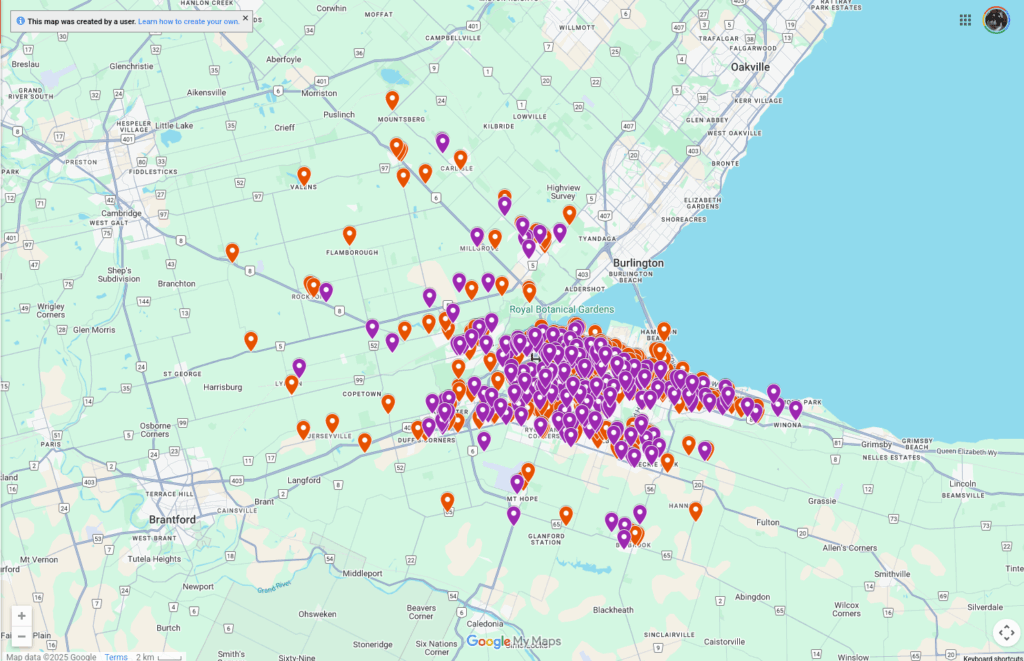
Marco agrees that the large plaza fronting Hamilton City Hall on Main Street West downtown and a popular spot for local political rallies would possibly be covered by the ban. The plaza is situated across the street from the New Vision United Church.
There are many “gray areas,” when it comes to describing a building as a place of worship, which Hamilton city lawyers will have to nail down, argued Marco. “Almost every hospital has a prayer room. Does that mean that a hospital is a place of worship?”
One final wrinkle is the promise by newly elected prime minister Mark Carney to introduce a bubble zone law on a national level. No details have been announced. The intention of the Liberal party is to “make it a criminal offence to intentionally and willfully obstruct access to any places of worship, schools, and community centres; and a criminal offence to willfully intimidate or threaten those attending services at these locations.”
An Addendum by the editors of UJPO News
Several critics of bubble zone legislation (e.g. Desmond Cole in The Breach) have observed that existing legislation already deals with some of the issues bubble zone by-laws clumsily address. For example, Section 176 of the Criminal Code deals with obstructing or inflicting violence on a priest or the congregation at a religious service. Section 319, we might note, is the so-called “Hate Law.” And finally, we should note that Section 318 prohibits the wilful advocacy of genocide. Perhaps, some of the advocates of bubble zones should be made aware that they could risk prosecution under Section 318!
We note also that bubble zone legislation is not a new phenomenon. It was used in British Columbia against truly violent anti-abortion activists. It has also been used, apparently, against lesbian and gay activists.
This articles was originally published in the summer edition of UJPO News.